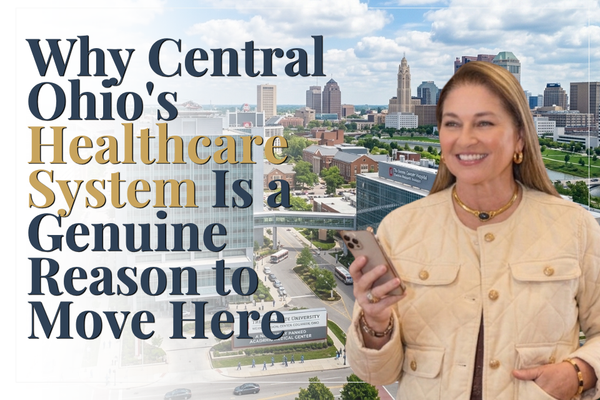
The Honest Case for Moving to Central Ohio (From Someone Who Lives Here)
People move to Columbus for a job and stay because they love it here — and the reasons are more specific than the usual Midwest city talking points. Here's the real case for Central Ohio, from someone who lives and works here.
Central Ohio has quietly become one of the Midwest's most compelling places to live — affordable relative to coastal metros, genuinely growing, and with a quality of life that surprises most people who move here. Here's the real version.
I've had some version of the same conversation dozens of times. Someone relocating from out of state — usually from a coast, sometimes from Chicago or Atlanta — tells me they're moving to Columbus for a job. They're a little uncertain. They didn't exactly choose Central Ohio; the opportunity brought them here.
And then, about six months in, I get the message: "Okay, we actually love it here."
It happens often enough that I've stopped being surprised. But I haven't stopped finding it worth talking about, because the case for Central Ohio is real — and it's more specific than the generic "great Midwest city" framing that gets passed around.
Why Are People Moving to Central Ohio?
The short answer is jobs and quality of life at a price that still makes sense. Central Ohio has seen significant economic investment in recent years — Intel's semiconductor manufacturing campus in New Albany and Licking County represents a $28 billion investment and one of the largest private sector investments in Ohio's history. That has pulled a wave of affiliated employers, suppliers, and workers into the region.
Columbus is also home to The Ohio State University, Nationwide Insurance, JPMorgan Chase, Abercrombie & Fitch, and a growing tech sector. The city consistently ranks among the top metros for job growth among large Midwestern cities.
But the people who stay — the ones who move here for a job and build a life — aren't usually talking about the economic data at dinner. They're talking about the house they could actually afford, the commute that doesn't require two hours of their day, and the fact that they found their neighborhood faster than they expected to.
What Surprises People Who Move to Columbus?
Almost universally: the food.
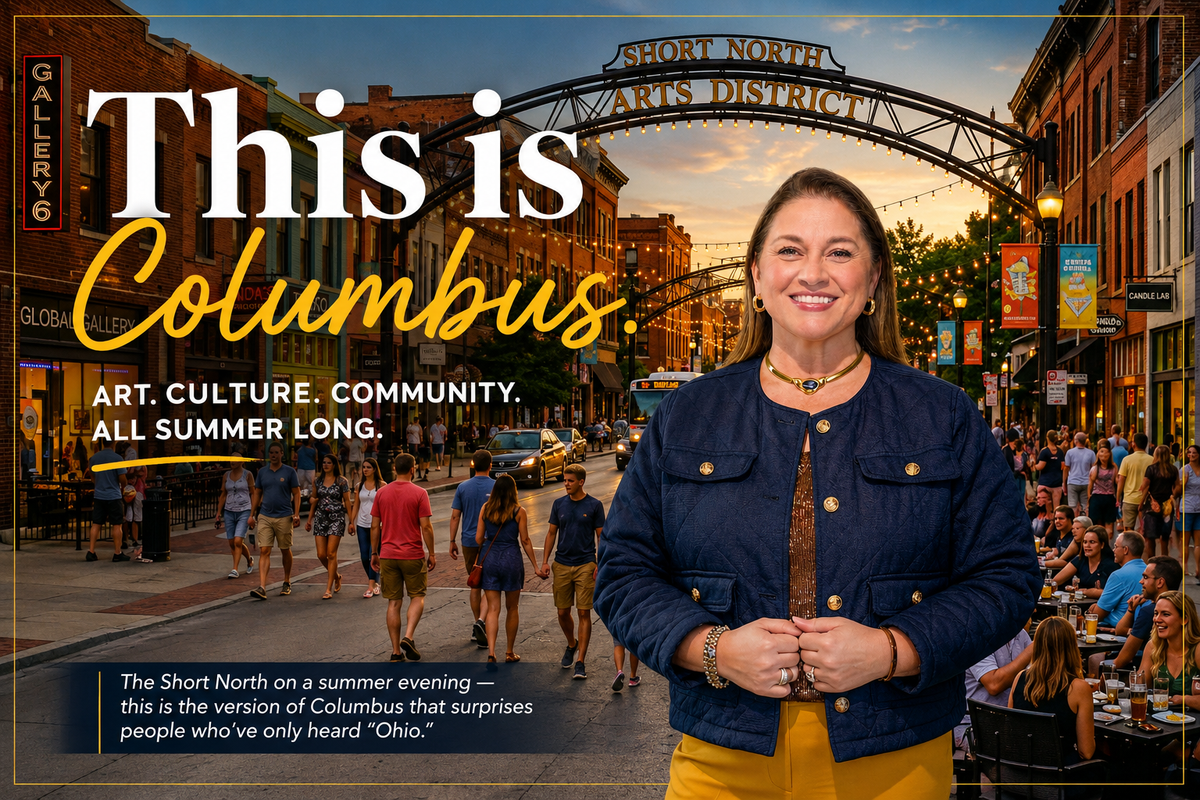
Columbus has quietly developed one of the better independent restaurant scenes in the Midwest. The Short North Arts District — a walkable stretch of High Street between downtown and Ohio State — has restaurants, galleries, and shops that would be at home in any major city. German Village, just south of downtown, is a 19th-century brick neighborhood with a James Beard Award-winning restaurant (The Refectory), boutique shops, and one of the city's most distinctive residential areas.
The second surprise is usually how quickly people find community. Columbus has enough critical mass — about 900,000 people in the city, 2.1 million in the metro — to have genuine neighborhood identity and culture, without the anonymity of the largest metros. There's a Short North crowd, a Clintonville crowd, a Dublin crowd, a Westerville crowd. People tend to plant themselves in one part of the city and become regulars somewhere fairly fast.
The third surprise is the seasons. Ohio seasons are real, and people from places with mild climates feel them for the first time here. After the first winter, most people appreciate spring in a way they never did before.
What Does It Cost to Live in Central Ohio?
This is where the honest pitch gets strong. The Franklin County median home price was in the low $300,000s as of early 2026. Compared to coastal metros where that number might get you a one-bedroom condominium, Central Ohio offers full houses with yards, garages, and room to grow.
In suburbs like Hilliard, Pickerington, Grove City, and Canal Winchester, buyers regularly find single-family homes in the $250,000–$380,000 range. In Dublin, one of the area's most established suburbs along the Scioto River, the average home value sits around $566,000 (Zillow, April 2026) — still well below comparable suburbs of Boston, Denver, or Seattle.
Columbus proper has neighborhoods at many price points. Italian Village, Franklinton, and Clintonville offer urban character with more accessible entry points than the suburbs.
Where Should I Start Looking in Central Ohio?
It depends on what your daily life looks like, and I'd rather ask you a few questions than give a generic answer. That said, here are honest starting points:
If commute is your first priority: Look at suburbs along I-270 — Dublin, Hilliard, Westerville, Gahanna, and Pickerington all have direct highway access. Dublin is particularly well-connected to the northwest employment corridor.
If walkability and energy matter to you: Clintonville, German Village, Italian Village, and the Short North have genuine walkable character. These are city neighborhoods, not suburbs.
If you want more space and a quieter pace: New Albany, Powell, and Granville offer larger homes, strong school districts, and a lower-density feel. Granville in particular is a college town (Denison University) with a genuinely beautiful historic downtown.
If budget is the first filter: Reynoldsburg, Pataskala, Groveport, and Canal Winchester offer the most house per dollar while remaining within 30–40 minutes of downtown Columbus.
FAQ: Moving to Central Ohio
Is Columbus, Ohio a good place to live? Columbus is consistently ranked among the top large Midwestern metros for job growth, affordability relative to coastal markets, and quality of life. The city has a strong independent food and arts scene, four distinct seasons, a large university presence, and a cost of living meaningfully below comparable cities like Denver, Austin, or Chicago. The metro population reached approximately 2.1 million in recent years.
What is the cost of living like in Central Ohio compared to other cities? Central Ohio's cost of living is well below the national average for a metro of its size. The Franklin County median home price sat in the low $300,000s in early 2026, compared to national medians well above that in most coastal and Sun Belt metros. Groceries, dining, and utilities tend to be lower than in larger metros.
What neighborhoods in Columbus are best for people relocating from out of state? For people relocating to Columbus, common starting points include: Clintonville and German Village for walkable urban character; Dublin and Westerville for established suburban amenities; New Albany and Powell for more space and a quieter pace; and Hilliard, Pickerington, or Gahanna for value and highway access. The right answer depends heavily on commute, lifestyle, and budget priorities.
What is it like to move to Columbus, Ohio from a larger city? Most people who relocate to Columbus from larger coastal or Sun Belt cities report being surprised by the quality of the food and arts scene, the ease of getting around, and how quickly they found community. The tradeoffs relative to larger metros include fewer direct flight options and distinct four-season weather, including real winters. Most residents say they adjusted quickly and would make the same move again.
I always say the same thing to people who are uncertain about a Columbus move: give it one year. One year of seasons, one summer of festivals and patios, one winter that makes spring feel earned. By that point, most people have found their coffee shop, their neighborhood walk, their favorite farmers market stand.
If you're thinking about making Central Ohio your next chapter and want a real conversation about what it's like — neighborhood by neighborhood, month by month — I'd love to be that resource. No sales pitch, just someone who lives here and likes talking about it.
This content is provided for informational purposes only and does not constitute legal or financial advice. All real estate services are provided in compliance with Fair Housing laws, RESPA, TCPA, the REALTOR® Code of Ethics, and Ohio Real Estate Commission advertising regulations. Equal Housing Opportunity. Chrisi Hagan, Collins Lassiter Group, Red 1 Realty.